






About me
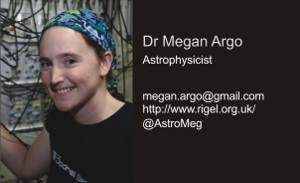
I'm a research astronomer, currently working at the University of Manchester's Jodrell Bank Centre for Astrophysics. I have many areas of research, but a lot of my time is spent on e-MERLIN Legacy surveys, large surveys being undertaken with the UK's network of radio telescopes. My other projects include: a wide-field VLBI survey of M31 using the new multiple phase centre capabilities of the DiFX software correlator, a survey of the Galaxy Zoo Voorwerpjes with Westerbork, EVN observations of OH masers in the M82 starburst, multi-epoch observations of NGC253 with NuSTAR/Chandra/VLBA, star formation and ULX sources in Arp147, and investigating compact sources with ultra-steep radio spectra.
Between 2011 and 2013 I worked as a researcher at Netherlands Institute for Radio Astronomy (ASTRON) on a variety of science projects, as well as acting as the RadioNet FP7 Project Scientist. Before starting at ASTRON I spent a few months at Jodrell Bank Observatory helping with the commissioning and early science observations with e-MERLIN (you can find the ParselTongue scripts I wrote for loading and housekeeping of e-MERLIN data, the current version of e-MERLIN data reduction pipeline, and the associated readme files, over here). Between 2008 and 2011 I was a postdoc at the International Centre for Radio Astronomy Research in Perth, Western Australia, where I worked on wide-field imaging techniques for VLBI. For more information about my research interests, read on or have a look at my publications list.
You may have heard my voice on the Jodcast where I write and produce the News each month and occasionally as a presenter, or on various other podcasts I've contributed to or been a guest on. Welcome to my little corner of the interweb, make yourself at home.



Research
I'm a radio astronomer working on starburst galaxies (and, sometimes, AGN). I completed a four-year masters degree in Physics with Astrophysics (including summer studentships at the Anglo-Australian Observatory in Sydney where I worked with the instrument science group, and at Jodrell Bank Observatory where I worked on gravitational lensing and wrote my first paper) before studying for a PhD in radio astronomy at Jodrell Bank Observatory. I stayed on at Jodrell for a bit as a postdoc before moving to Australia for three years to work at the Curtin Institute of Radio Astronomy (CIRA, one half of ICRAR) at Curtin University of Technology, where I was also the outreach coordinator for the group and a member of the international SKA Outreach committee. In 2011 I returned to the UK and spent a few months working back at Jodrell Bank Observatory on commissioning of e-MERLIN, working on data quality assessments, analysis of early science data, user support and data pipelines. In August 2011 I relocated to the Netherlands to take up a postdoc at ASTRON, and in 2013 I moved back to the UK for another position at the University of Manchester.
My PhD had two themes: radio supernovae in nearby starbursts, and masers in the nearby starburst galaxy M82. The first of these themes involved a five year observing project using both the Very Large Array (VLA) in New Mexico, and the Multi-Element Radio-Linked Interferometer Network (MERLIN) in England, to observe a sample of ten galaxies searching for new radio supernovae events. The idea is that optical surveys, while easier, could be missing supernovae in the central dusty regions of starburst galaxies because the dust blocks the light. This means that the estimates of the supernova rate are probably underestimated and, since this can be used to estimate the starformation rate in a galaxy, the starformation rates are probably underestimated as well. We discovered two new sources during this project, and did some really neat follow-up work on several other radio supernovae that happened during the project. I did a lot of observing while working on this project, and wrote up the interim results for my PhD.
The other part of my thesis was a study of OH masers in M82. Masers are like lasers, but while lasers in the lab generate huge amplifications through multiple passes of a light beam through a gas, masers in space are single-pass only - there are no giant mirrors to reflect the microwaves back through the amplifying cloud! These masers are often found in galactic disks, including the Milky Way, and can tell us a lot about the dynamics and physical conditions of the OH gas causing the maser effect.
Since completing my PhD my research interests have continued to diversify. I am currently involved with target of opportunity programmes investigating radio supernovae, several projects utilising the new wide-field capabilities of the DiFX software correlator (which allow the mapping of the entire primary beam of a VLBI array) including a high-resolution survey of M31, and a combined NuSTAR/Chandra/VLBA project investigating the nature of the X-ray sources in NGC253, a study of the Galaxy Zoo Voorwerpjes sample using Westerbork, an investigation of the nature of compact ultra-steep spectrum radio sources using the EVN and e-MERLIN commissioining data, more observations of the OH masers in M82, and e-MERLIN cycle-0 observations investigating the nature of the Arp147 interacting ring galaxy.
Public Outreach
I'm also very active in public outreach. As a PhD student at Jodrell I took part in a placement at Bolton School Boy's Division though the Scientists in Schools programme, ran the Ask An Astronomer sessions in the Visitor Centre, instigated public star parties with the Visitor Centre manager (they still run and are very successful), took an inflatable planetarium out to many schools in the area, did talks to visiting A-level groups, ran tours of the Observatory on open weekends, and helped get the Jodcast off the ground.
At Curtin, I was the outreach coordinator for the Curtin Institute of Radio Astronomy, and we made the most of the International Year of Astronomy! I worked together with AstronomyWA and Scitech on various projects around the area. I've helped out at numerous observing evenings, obtained a grant to buy 2000 IYA planispheres to distribute to Scout groups, run observing evenings on campus for various groups, visited several schools, organised stands for science fairs, got involved with Scientists in Schools, showed people the partial solar eclipse on Australia Day, was a "Prof" in one of Scitech's Profs and Pints (science in the pub) events, and have been up to Australia's proposed site for the SKA to talk to the local communities about astronomy. While in Australia I was also a member of the international SKA Outreach Committee.
In the Netherlands I took a bit of a break from outreach activities, but I still contributed to the Jodcast each month and continued to be a member of IAU Commission 55 Communicating Astronomy with the Public.
Now that I'm back in Manchester (August 2013), I am doing more public events through youth groups such as the Guides and Scouts, the Society for Popular Astronomy, local amateur astronomy societies in the region, and various other things that come my way.
When I'm not doing astronomy...
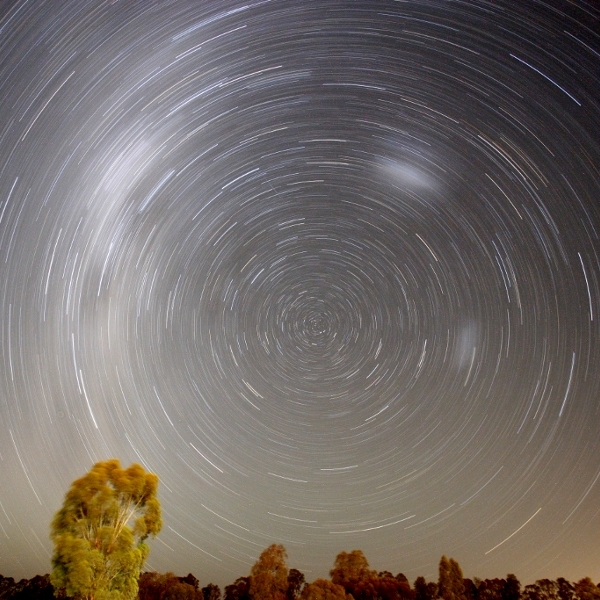
...I'm usually found camping, climbing, or playing music of some description - in Australia I was a drummer with the Sambanistas, and I'm currently playing the guitar and singing with some other foreigners in the Netherlands. I also record audio for the Jodcast, Librivox and a few other podcasts, and am an occasional contributor to Astronomy FM. I also dabble in photography from time to time, much happier behind the camera than I am in front of it. Some of my photos are on picasa, and you can see a random bunch of them in the nifty little flash slideshow on the right. Some of them have recently appeared in a number of publications. They are all licenced under the Creative Commons Attribution Non-Commercial Share-Alike No Derivatives licence, details of which can be found on the Creative Commons website. Please let me know if you use them (it's only polite).
Last updated: Tuesday, 18-Aug-2015 15:03:58 BST